Timothy Ngalande

Timothy Ngalande

Research Manager | Behavioral & Development Economist

Mobalyz (formerly SA Taxi)

Professional Summary

Timothy Ngalande is a behavioral and development economist (PhD, Stellenbosch University, 2026) working at the intersection of academic research and financial-sector application in sub-Saharan Africa. As Research Manager at Mobalyz — South Africa’s largest dedicated taxi-industry financier, with over 28,000 vehicles financed — he designs and implements field experiments alongside faculty from Duke’s Fuqua School of Business, Dartmouth College, and Northwestern’s Kellogg School of Management. The collaborative research examines how loan restructuring, driving behavioural incentives, and shock-smoothing mechanisms shape outcomes for South Africa’s 250,000+ minibus taxi operators: a sector that moves 15 million passengers daily yet remains largely outside formal financial markets.

His broader research agenda connects causal inference, field experiments, and economic history. His PhD examined how spatial segregation, labour discrimination, and railway infrastructure shaped long-run manufacturing productivity under Apartheid — drawing on quasi-experimental design, general equilibrium modelling, and growth accounting. He is a research affiliate of the Laboratory of Economics of Africa’s Past (LEAP) at Stellenbosch University.

Education

PhD Economics

Stellenbosch University

MRes Economics

University of Warwick

MCom Economics

Stellenbosch University

Interests

Behavioral Finance Development Economics Field Experiments & Causal Inference Labour Economics Economic History
Featured Papers
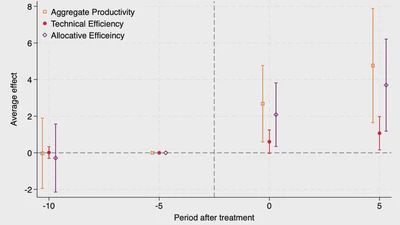
Geographical Segregation, Missallocation and Productivity in Apartheid South Africa Manufacturing: The Barrier-Breaking Iron Tracks of Growth featured image

Geographical Segregation, Missallocation and Productivity in Apartheid South Africa Manufacturing: The Barrier-Breaking Iron Tracks of Growth

A quasi-experimental research design to examine a crucial instrument of state policy; the national railway system. It finds that state-led upgrades to the railway network—a tool …

avatar
Timothy Ngalande
Read more
Quantifying Apartness in South Africa: A general equilibrium estimation of the impact or Labour Discrimination  featured image

Quantifying Apartness in South Africa: A general equilibrium estimation of the impact or Labour Discrimination

The study develops and calibrates a static general equilibrium model to quantify the aggregate economic losses attributable to discriminatory labour market policies, specifically …

avatar
Timothy Ngalande
Read more
Research